
Get a Free Quote

Our representative will contact you soon.
Email
Name
Company Name
Message
0/1000
Attachment
Please upload at least an attachment
Up to 3 files, each no larger than 30MB. Supported formats: jpg, jpeg, png, pdf, doc, docx, xls, xlsx, csv, txt, stp, step, igs, x_t, dxf, prt, sldprt, sat, rar, zip.

Compression Springs

Compression Springs

Home /  Products /  Compression Springs

Compression Spring

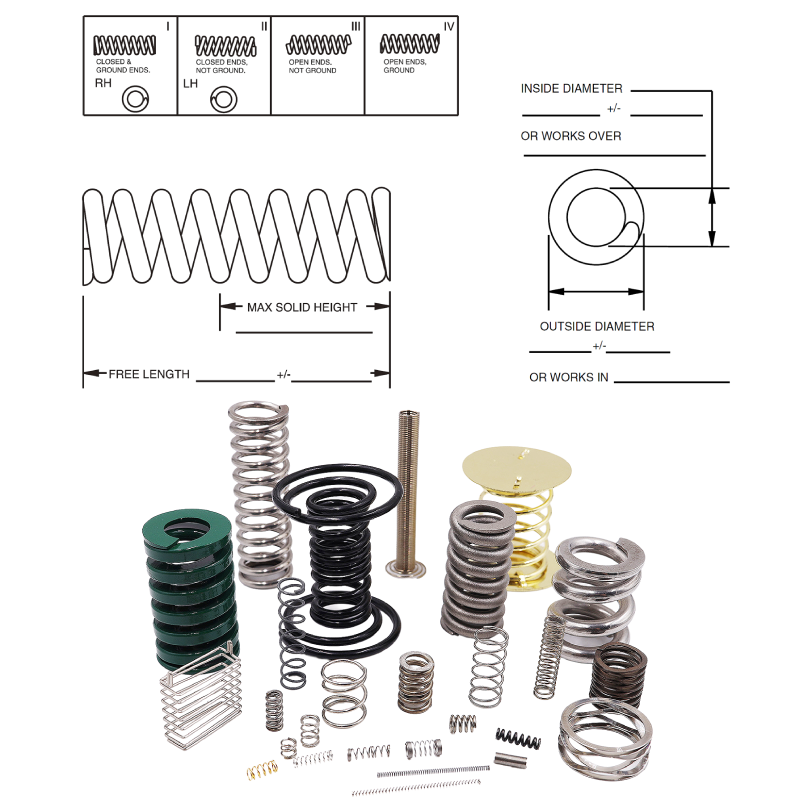
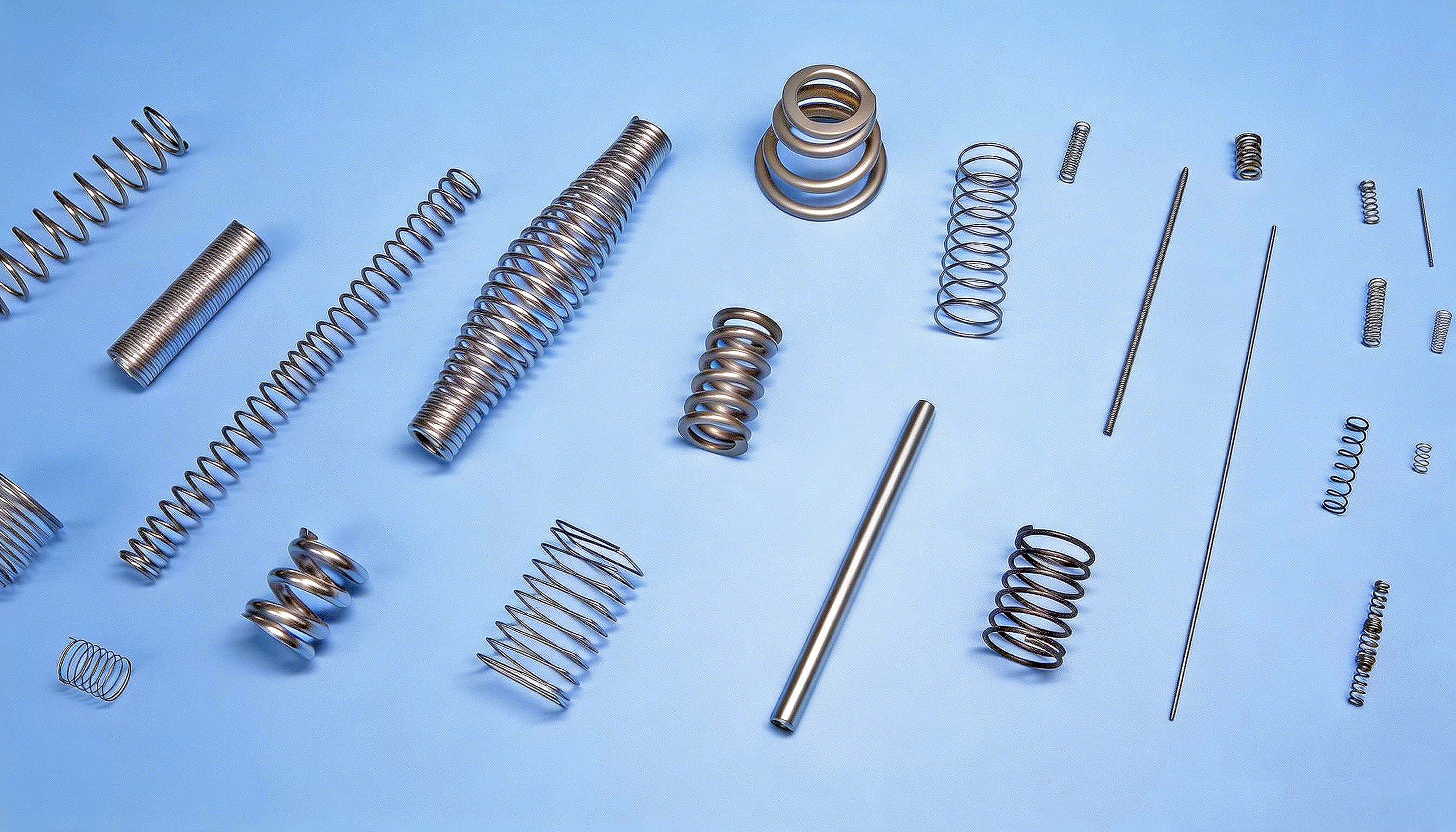
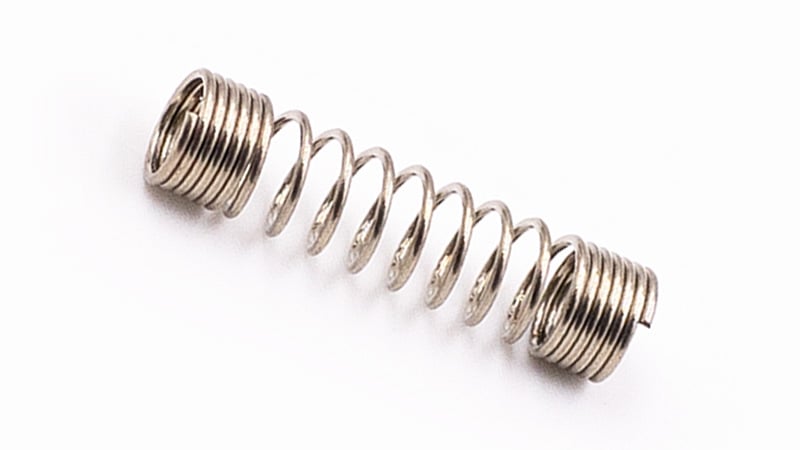
Compression springs are open-coil helical springs wound or constructed to oppose compression along the axis of wind. Helical Compression Springs are the most common spring configuration. Generally, they are either placed over a rod or fitted inside a hole. When you put a load on a compression spring, making it shorter, it pushes back against the load and tries to get back to its original length. Compression springs offer resistance to linear compressing forces (push), and are in fact one of the most efficient energy storage devices. Compression springs can be supplied with ground ends for improved squareness and reduced solid heights.

Learn More
compression springs-0

Compression Spring Design:

Cylindrical • Conical • Barrel • Hourglass

Closed Ends • Open Ends • Reduced Ends

Ground Ends • Unground Ends

Constant Pitch • Variable Pitch


Finishing Operations:

Stress Relieve • Heat Treating • Passivation

Shot Peening • Plating • Painting

Powder Coating • Grinding

Wire sizes from 0.03 through 10mm


Materials:

Carbon Steels • Alloy Steels

Stainless Steel 17-7, 302, 304 and 316

Phosphor Bronze

Inconel x750


At Yisen Spring, we specialize in the professional design, custom engineering, and high-volume manufacturing of all types of compression springs. Whether your project requires standard cylindrical profiles, space-saving conical designs, or vibration-dampening variable pitch configurations, our advanced production facility is fully equipped to meet your exact specifications. Our manufacturing capabilities feature an exceptional range of wire diameters, stretching from ultra-fine precision micro-springs at 0.04mm up to heavy-duty industrial springs at 10mm. Backed by rigorous quality control and a commitment to rapid turnaround times, Yisen Spring delivers the perfect balance of micro-precision and robust strength for any industry application.

Compression Spring Manufacturing Process

We specialize in the professional design, custom engineering, and high-volume manufacturing of all types of compression springs.

标题

OUR PRODUCTS

Compression Spring

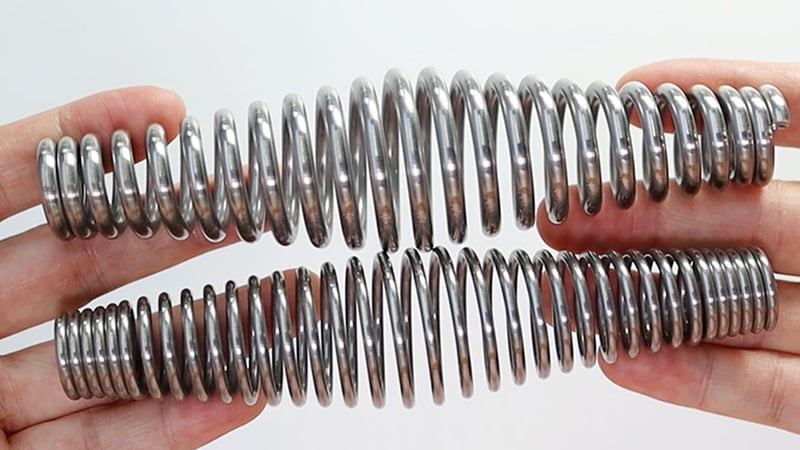
Cylindrical Compression Springs

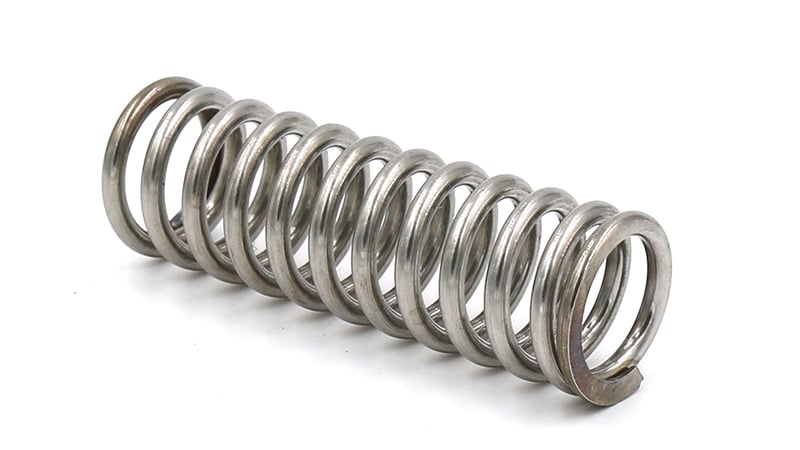
The standard and most widely used type of compression spring. Featuring a straight, uniform coil diameter, they offer a linear, consistent spring rate. Highly versatile and cost-effective, cylindrical springs are the go-to solution for a vast range of applications, spanning from simple push-buttons and consumer electronics to heavy-duty industrial machinery.

Cylindrical Compression Springs

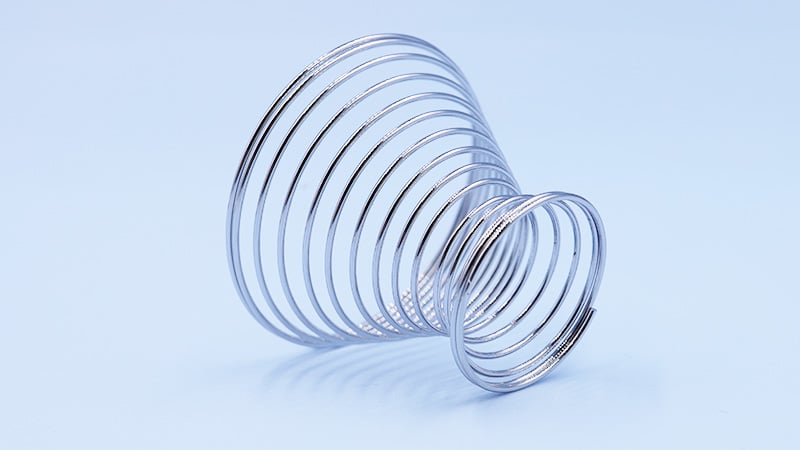
Conical Compression Springs

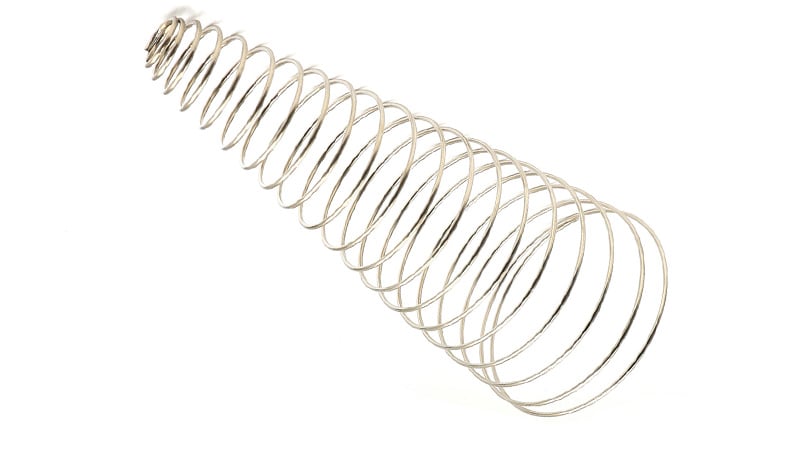
Designed with a cone-shaped profile that allows the active coils to telescope into one another when fully compressed. This telescoping action drastically reduces the spring's solid height (the height when fully compressed). Conical springs provide exceptional lateral stability and a variable spring rate, making them ideal for confined spaces, push-button mechanisms, and battery contacts.

Conical Compression Springs

Barrel Compression Springs

Featuring a convex profile, barrel springs have a wider outer diameter in the center that tapers down toward the ends. This unique shape naturally resists buckling and prevents coil surging under high-speed, dynamic compression. They offer superior stability and load distribution, making them an excellent choice for automotive suspensions, seating systems, and agricultural equipment.

Barrel Compression Springs

Hourglass Compression Springs

Characterized by a concave design, hourglass springs are narrower in the middle and wider at the ends. This geometry allows the spring to easily center itself over a guiding rod or within a custom housing. They provide excellent lateral stability and are frequently utilized in specialized mechanical assemblies requiring precise force delivery and self-centering capabilities.

Hourglass Compression Springs

Variable Pitch Compression Springs

Unlike standard designs, the distance (pitch) between the coils of a variable pitch spring changes along its length. This advanced engineering delivers a variable spring rate—meaning the spring becomes stiffer the more it is compressed. They are incredibly effective at dampening vibrations and preventing harmonic resonance, which is why they are widely used in high-speed engine valves and dynamic shock absorbers.

Variable Pitch Compression Springs

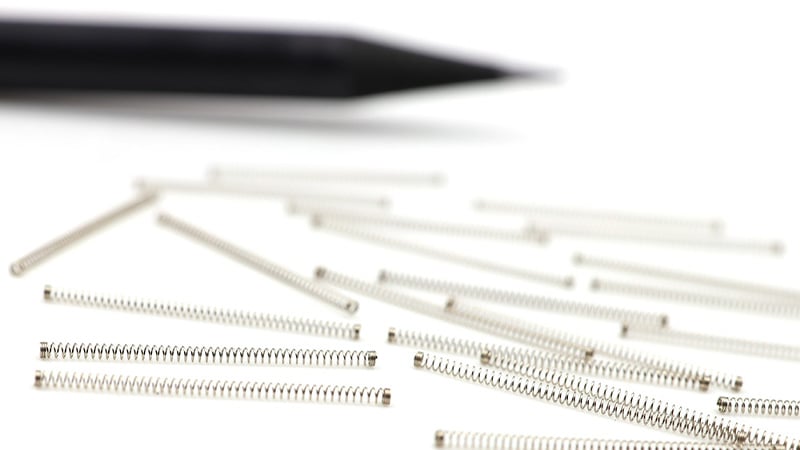
Micro Compression Springs

Engineered for extreme precision in applications where space is at an absolute premium. Manufactured using ultra-fine wire, miniature compression springs deliver highly accurate force in incredibly tiny footprints. They are the critical driving components behind modern technological advancements, extensively used in life-saving medical implants, micro-valves, precision aerospace instrumentation, and miniaturized electronics.

Micro Compression Springs

Application Industry

Automotive Industry

Automotive Industry

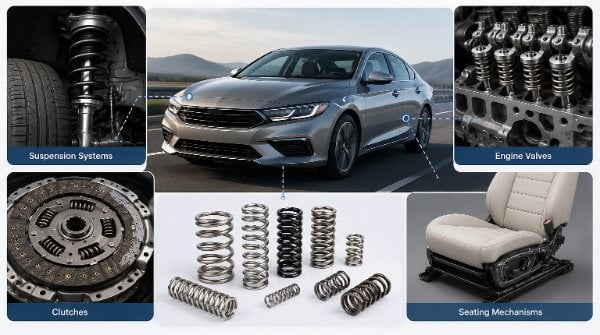
Compression springs are critical components in the automotive sector. They are most prominently used in vehicle suspension systems to absorb road shocks, provide a smooth ride, and maintain tire contact with the road. Additionally, they are essential in engine valves, clutches, and seating mechanisms.

Consumer Electronics

Consumer Electronics

In consumer electronics, highly precise micro compression springs are utilized to ensure reliable electrical conductivity and tactile feedback. Common applications include battery contacts, keyboard switches, push-button mechanisms, and internal components of smartphones and cameras.

Medical Devices

Medical Devices

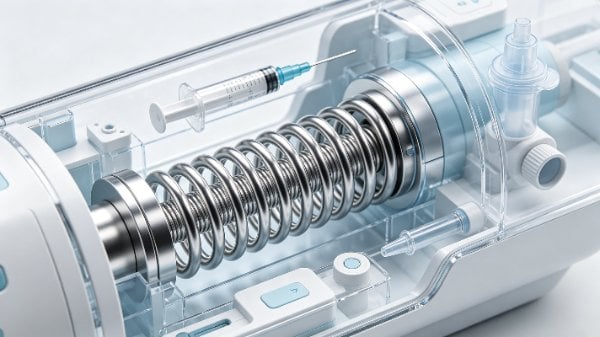
The medical field relies on highly precise, often custom-manufactured compression springs made from biocompatible materials. They are critical in surgical instruments, medical staplers, drug delivery systems (such as inhalers and auto-injectors), and various diagnostic equipment.

Industrial Machinery

Industrial Machinery

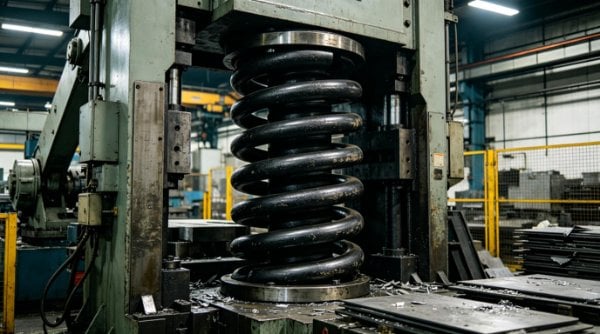
Heavy-duty compression springs are foundational to industrial manufacturing and processing equipment. They are heavily utilized in stamping presses, conveyor systems, mining equipment, and pressure relief valves to handle massive load capacities and store significant mechanical energy safely.

Aerospace and Aviation

Aerospace and Aviation

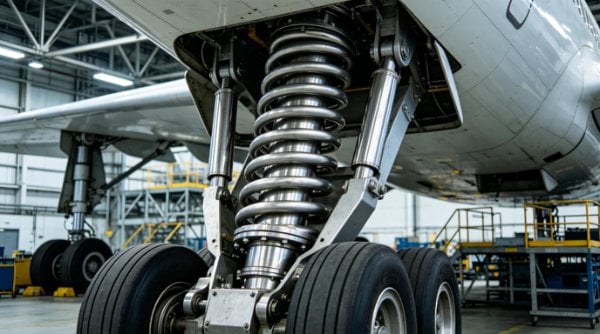
Aerospace applications demand compression springs manufactured from specialized, high-performance alloys capable of withstanding extreme temperatures and stress. They are routinely integrated into aircraft landing gear shock absorbers, flight control systems, and various engine components.

Household Appliances

Household Appliances

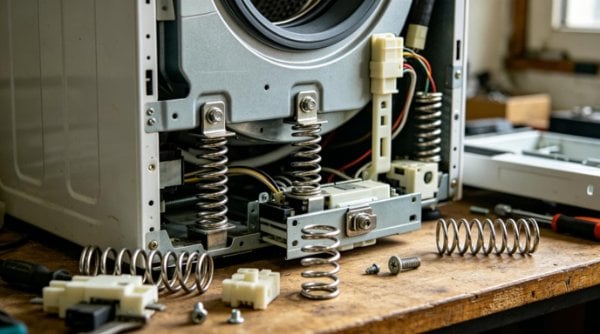
Everyday home appliances utilize compression springs for vibration isolation, tensioning, and mechanical operation. Prominent examples include the internal suspension systems in washing machines to balance the drum, door latches in microwaves, and dispensing mechanisms in refrigerators.

FAQ

  • What is a compression spring and how does it function?
    A compression spring is an open-coil helical spring designed to resist compressive forces. When an external load pushes down on the spring, the coils squeeze together and store mechanical energy. Once that load is removed, the spring releases the stored energy to push back and return to its original, uncompressed length. They are the most common type of spring, found in everything from household ballpoint pens to industrial machinery.

  • What is the difference between "Free Length" and "Solid Height"?
    These are two critical dimensions in spring design:

    Free Length: The total overall length of the spring when it is completely unloaded and relaxed.

    Solid Height: The maximum compressed length when all the active coils are pushed completely tight against each other, leaving no space between them.

    Important Note: A compression spring should never be fully compressed to its solid height during regular operation, as this causes extreme stress and shortens the spring's lifespan.

  • How do I choose the right material for my compression spring?
    Material selection depends on your application's operating environment and budget:

    Music Wire (Carbon Steel): Best for high-stress, high-fatigue applications used in standard indoor environments. It offers incredible strength but can rust if exposed to moisture.

    Stainless Steel (Grades 302/304/316): Best for medical, marine, or outdoor applications. It provides excellent corrosion resistance and performs well in harsher environments.

    Copper Alloys (Phosphor Bronze/Brass): Ideal for electrical components due to their superior electrical conductivity and non-magnetic properties.

  • Why do compression springs sometimes bend or buckle, and how can I prevent it?
    Buckling occurs when a spring is too tall and narrow relative to its diameter. When compressed, the middle bows outward instead of pressing straight down. As a rule of thumb, if the free length is more than 4 times the outer diameter, the spring is prone to buckling. You can easily prevent this by redesigning the spring with a larger diameter, or by guiding it internally with a center rod or externally within a housing tube.

Compression Spring

Get a Free Quote

Our representative will contact you soon.
Email
Name
Company Name
Message
0/1000
Attachment
Please upload at least an attachment
Up to 3 files, each no larger than 30MB. Supported formats: jpg, jpeg, png, pdf, doc, docx, xls, xlsx, csv, txt, stp, step, igs, x_t, dxf, prt, sldprt, sat, rar, zip.
compression springs-1

Get a Free Quote

Our representative will contact you soon.
Email
Name
Company Name
Message
0/1000
Attachment
Please upload at least an attachment
Up to 3 files, each no larger than 30MB. Supported formats: jpg, jpeg, png, pdf, doc, docx, xls, xlsx, csv, txt, stp, step, igs, x_t, dxf, prt, sldprt, sat, rar, zip.