 EN


From material shortages and equipment limitations to technological breakthroughs and volume production, we have advanced the special spring project for new energy vehicles through long-term collaboration.
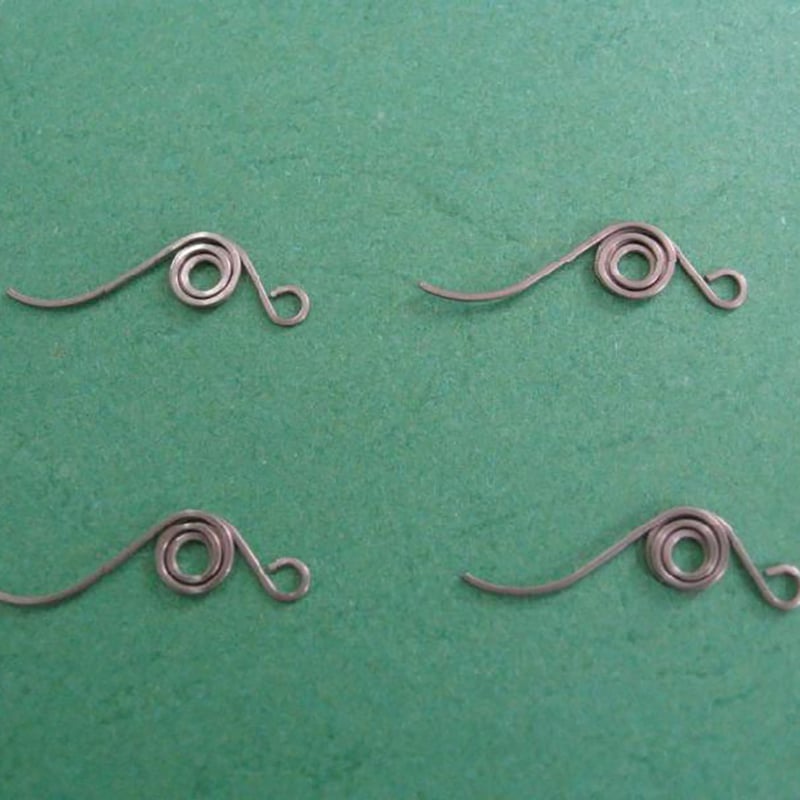
In the field of precision spring manufacturing, not every project can be completed in a short cycle. From the initial product concept, material selection, equipment adaptation and sample testing, to final mass production launch, certain special products for the new energy track require manufacturers and clients to invest substantial time and effort together. Dongguan Yisen Precision Hardware Spring Co., Ltd. has carried out a four-year joint development project with a client specializing in flat copper coils for new energy vehicles. This component is matched to the drive motor of new energy vehicles, serving as a critical elastic connection part within the flat wire motor system. It has stringent requirements for conductive stability, vibration fatigue resistance, high-temperature resistance and automotive-grade consistency. As a key small component, it helps increase the motor slot fill rate and ensures the long-term reliable operation of the powertrain. This project was confronted with insufficient material supply and mismatched processing equipment right from the start of cooperation. Faced with a long development cycle, high technical difficulty and strict vehicle-level verification standards, we kept moving forward alongside the client. Through continuous sampling, material coordination and technical communication, we finally helped the client achieve mass production and successfully integrate the product into the supply chain of new energy vehicle motors.
I. Early Stage of the Project: Dual Constraints of Materials and Equipment
Four years ago, the client first contacted us and provided product drawings and relevant parameter specifications, hoping to find a spring manufacturer capable of collaborative development for the new-generation flat wire drive motor of new energy vehicles.
Nevertheless, practical challenges emerged at the very beginning of the project.
First was the material issue. As a special-specification flat copper elastic component, the product needs to deliver excellent electrical conductivity while meeting elastic fatigue requirements under repeated deformation. Conventional spring materials available on the market cannot satisfy such demands directly. At that time, suitable copper alloy materials were hard to source. Some qualified options came with high procurement costs and unstable supply. For ordinary spring manufacturers, projects of this type carry high development costs and uncertainties. Coupled with the high access threshold for new energy auto parts, many suppliers were reluctant to commit to long-term R&D.
Second was the equipment issue. The client’s product belonged to an early-stage R&D project for new energy powertrains. Its requirements for forming precision, flat material bending control and surface insulation protection far exceeded those of ordinary springs. Existing production equipment could not fully support the processing, and additional equipment was required for sampling and testing. This raised upfront investment, extended the whole development cycle, and meanwhile had to align with the rigorous reliability verification schedule of automakers.
Restricted by both materials and equipment, the project could not proceed directly to formal production. We had to resolve the fundamental manufacturing conditions step by step and pass sample validation and bench tests to meet the standards for the three-electric system of new energy vehicles.
II. Sustained Commitment: Iterative Sampling and Refinement of Technical Details
After evaluating the market prospect and technical value of this new energy project, we decided to continue the joint development with the client.
In the subsequent progress, both sides held multiple communications regarding material supply, product structure and processing requirements. To tackle material shortages, we actively searched for qualified suppliers and sourced suitable flat copper base materials adapted to high-temperature and high-frequency vibration working conditions of motors. To address equipment incompatibility, we adjusted production conditions and carried out sampling tests to explore feasible processing methods, with tight control over forming tolerances and contact surface flatness to guarantee low impedance and stable contact during power conduction.
Given the strict development specifications for new energy auto parts, initial samples required multiple revisions. We supported the client synchronously to complete a series of validations including motor bench durability, high-low temperature cycling and vibration shock tests. Each sampling run was not only a confirmation of product dimensions, but also further verification of material suitability, processing routes and production feasibility.
For such special elastic parts matched to flat wire motors, manufacturing details often determine the final performance. A minor parameter change or structural adjustment may affect the motor’s conductive stability, heat dissipation and even vehicle safety. Therefore, our team maintained constant communication with the client, optimized samples based on test feedback, and gradually narrowed the gap between design specifications and actual manufacturing.
The development journey was demanding, yet both parties strived toward the same goal: turning design drawings into stably manufactured products to support the launch of the new-generation flat wire motor.
III. Long-Term Partnership: Building Trust through Persistence
During the four-year cooperation, our team did not treat this project as a one-off processing order. Instead, we took deep part in the client’s product development of new energy motors.
Even when confronted with material supply difficulties, equipment constraints, repeated sampling and multiple rounds of vehicle-level verification, we kept open communication and jointly explored solutions.
For clients in the new energy industry, supplier selection depends on more than product pricing. Continuous technical support throughout cooperation is equally critical. Especially for R&D-stage three-electric component projects, whether a supplier is willing to invest time, understand automotive-grade requirements and cooperate on repeated adjustments directly determines the progress of the whole vehicle project.
Through long-term running-in, both sides built a stable cooperative relationship. Starting from drawing communication, sample validation, multiple reliability tests to the gradual maturity of production conditions, our cooperation evolved from simple quotation inquiry into a long-term co-development partnership for new energy components.
IV. Project Outcome: From R&D Phase to Mass Production
With consistent technical support and development input, the project achieved phased success. After around 2 to 3 years of development and reliability verification, the flat copper coil elastic component for the client entered mass production and was successfully installed on drive motors of new energy vehicles.
This milestone marks the completion of product development and demonstrates the great value of long-term collaboration for the commercialization of special new energy vehicle parts. After application, the elastic component can steadily maintain the contact pressure of flat windings, reduce operating heat generation and improve motor durability, helping vehicles achieve better range and power stability.
Looking back on the whole project, initial material shortages and equipment limitations did not stop our cooperation. Instead, both sides resolved practical obstacles through continuous communication, adjustment and verification, and successfully passed automotive qualification certification.
For us, this is not merely a development case of special springs for new energy vehicles, but also a practice proving the value of long-term partnership.
V. Delivering Long-Term Development Capabilities for Global Clients
Yisen Springs specializes in customization and manufacturing of precision metal springs. We support product development and production matching according to clients’ drawings, samples and application requirements, and can cater to the development needs of high-durability and conductive special-shaped elastic parts.
We fully recognize that the success of special spring projects for new energy vehicles relies not only on processing equipment and production experience, but also on continuous understanding of materials, processes, vehicle working conditions and client demands. Particularly at the new product R&D stage, manufacturers need patience and a spirit of collaboration to help clients realize the transformation from design to production, and from prototype to vehicle verification. This four-year cooperation reinforces our belief: valuable cooperation is far more than fulfilling a purchase order. It means standing together with clients to work out solutions when challenges arise in new product R&D, and jointly fuel technological iteration of the new energy industry.
From the first drawing to volume production, Yisen Springs always takes manufacturing capability as the foundation and long-term collaboration as the bond, accompanying new energy clients to turn product concepts into finished components for vehicle assembly.